
A free market economy is an economic system in which the allocation of resources, production of goods and services, and pricing are primarily determined by the forces of supply and demand, rather than government intervention. In such economies, individuals and private businesses make the majority of economic decisions, from what products to produce to how to price them.
The free market system forms the backbone of many modern economies, promoting efficiency, innovation, and consumer choice. However, it also comes with certain challenges that require careful management. Understanding this system is crucial for students, entrepreneurs, and policymakers alike.
What Is a Free Market Economy?
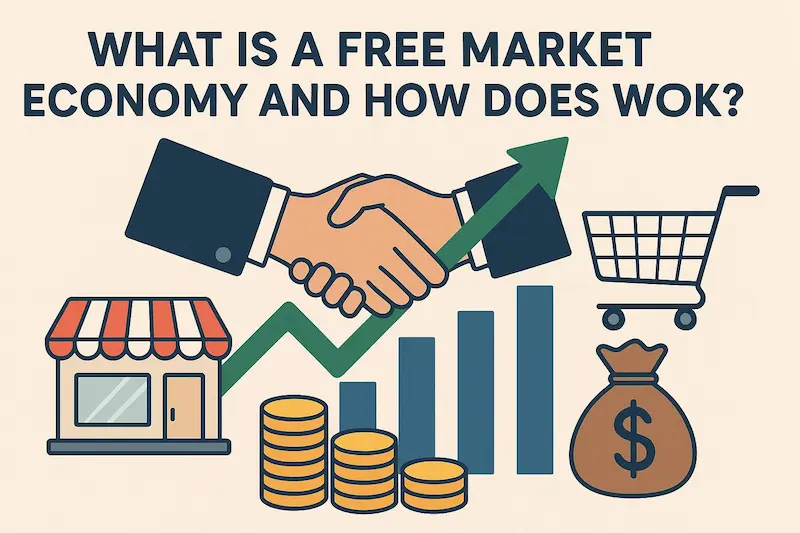
At its core, a free market economy emphasizes economic freedom. Buyers and sellers interact freely, negotiating prices and quantities based on preferences, scarcity, and opportunity. This interaction creates a natural mechanism called the price system, which balances demand and supply.
For example, if a particular smartphone model becomes highly popular, demand increases. Businesses respond by producing more, which can lead to higher profits. Conversely, if a product is less desired, prices drop, and production may be reduced. This self-regulating feature is a defining trait of free market economies.
Key Characteristics of a Free Market Economy
A free market economy has several distinct features:
1. Private Ownership
Individuals and businesses have the right to own land, capital, and resources. Private ownership encourages responsible management of resources, investment, and wealth creation.
2. Economic Freedom
Both producers and consumers enjoy freedom of choice. Producers decide what and how much to produce, while consumers determine what to purchase. Workers are free to choose their occupation and negotiate wages.
3. Competition
Competition between businesses drives efficiency, innovation, and quality improvement. Companies compete for consumer attention, creating better products at competitive prices.
4. Profit Motive
The desire for profit motivates entrepreneurs to innovate, reduce costs, and expand their operations. Profits act as a reward for risk-taking and resourcefulness.
5. Minimal Government Intervention
While the government may enforce contracts, property rights, and regulations to prevent fraud or monopolies, it generally does not interfere with market operations. This ensures that economic decisions are primarily market-driven.
6. Consumer Sovereignty
Consumers play a central role in deciding what gets produced. Their preferences, spending habits, and choices determine market trends.
You may also like it:
Global Conflict Updates: Latest Wars, Crises & Security
World Politics Analysis: Global Power, Diplomacy & Policy
Urban Social Life: Culture, Community, and City Living
How a Free Market Economy Works
In a free market economy, prices act as signals that guide producers and consumers:
- High demand: When demand rises for a product, prices increase, signaling producers to supply more.
- Low demand: When demand falls, prices drop, signaling producers to reduce production.
This dynamic ensures efficient resource allocation, as resources are directed toward the goods and services most desired by society.
The market economy also relies on the concept of voluntary exchange. Transactions occur when both parties benefit, creating a mutually advantageous system that fosters economic growth and consumer satisfaction.
Advantages of a Free Market Economy
1. Economic Efficiency
Resources are utilized where they are most valued, reducing waste and maximizing productivity.
2. Encourages Innovation and Entrepreneurship
Businesses compete to offer better products and services, leading to technological advancements and innovative solutions.
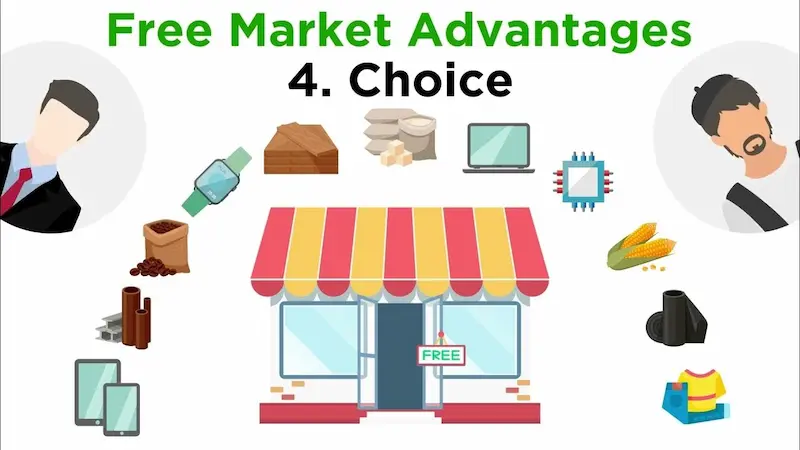
3. Consumer Choice
Consumers have a wide range of goods and services to choose from, enhancing their standard of living.
4. Wealth Creation
Profit incentives encourage investment, entrepreneurship, and the growth of businesses, contributing to overall economic development.
5. Rapid Response to Market Changes
Markets quickly adjust to changes in supply, demand, or consumer preferences, making the economy more adaptable.
Disadvantages of a Free Market Economy
Despite its advantages, a free market economy has some limitations:
1. Income Inequality
Wealth may concentrate in the hands of a few, leaving some individuals or regions economically disadvantaged.
2. Market Failures
Certain goods and services, such as healthcare, education, and environmental protection, may be underprovided.
3. Exploitation Risk
Without regulations, workers may face poor wages, unsafe conditions, and unfair treatment.
4. Economic Instability
Free markets are susceptible to booms and busts, causing unemployment, inflation, or financial crises.
5. Short-Term Focus
Businesses may prioritize short-term profits over long-term societal benefits, leading to environmental degradation or neglect of social welfare.
Role of Government in a Free Market Economy
Even in a free market system, the government plays a crucial supporting role:
- Law and order: Enforcing contracts, protecting property rights, and ensuring fair competition.
- Regulation: Preventing monopolies, fraud, and unfair trade practices.
- Public services: Providing essential services such as education, healthcare, and infrastructure.
- Stabilization: Managing economic fluctuations through fiscal and monetary policies.
This limited yet strategic intervention ensures that markets remain fair, stable, and sustainable.
Real-World Examples of Free Market Economies
Several countries follow free market principles, though most also incorporate some government regulations:
- United States: Emphasizes private enterprise, innovation, and competition, while regulating key industries.
- Singapore: Known for a highly open and competitive market with minimal government interference in business operations.
- United Kingdom: Combines free market principles with social welfare programs.
- Australia: Maintains a competitive market economy with government support for healthcare and infrastructure.
These economies demonstrate that a well-functioning free market can coexist with regulations designed to protect citizens and promote fairness.
Free Market Economy vs Command Economy
| Feature | Free Market Economy | Command Economy |
| Ownership | Private | Government |
| Pricing | Determined by supply & demand | Set by government |
| Competition | High | Limited |
| Innovation | Encouraged | Restricted |
| Consumer Choice | Extensive | Minimal |
| Efficiency | Market-driven | Centralized planning |
This comparison highlights the flexibility and efficiency of free markets, but also the risks of inequality and underprovided public goods.
Conclusion
A free market economy empowers individuals and businesses to make economic decisions, fostering innovation, competition, and economic growth. While it offers numerous advantages such as efficiency, consumer choice, and wealth creation, it also comes with challenges like income inequality, market failures, and economic instability.
A balanced approach, where minimal government intervention ensures fairness and stability, often produces the most sustainable outcomes. Ultimately, a free market economy thrives when consumers, producers, and regulators work together to maintain a dynamic yet equitable system.
FAQs About Free Market Economy
1. What is a free market economy in simple terms?
It’s an economic system where supply, demand, and prices are determined by buyers and sellers, not the government.
2. How does a free market economy encourage innovation?
Competition motivates businesses to create new products, improve quality, and reduce costs.
3. Which countries follow a free market system?
The United States, United Kingdom, Singapore, and Australia are prime examples.
4. Can a free market economy have government regulations?
Yes, limited government intervention is used to protect property rights, enforce laws, and prevent monopolies.
5. What are the main drawbacks of a free market economy?
Income inequality, market failures, exploitation risks, and economic instability are the main challenges.