

The digital world is evolving at an unprecedented pace, transforming how humans communicate, work, learn, entertain themselves, and manage everyday life. The future of digital world envisions a society where technology and human activity are deeply interconnected, creating a hyper-connected, AI-driven, immersive, and sustainable digital ecosystem.
From artificial intelligence (AI) and augmented/virtual reality (AR/VR) to blockchain, quantum computing, 5G/6G, and the metaverse, technological innovations are reshaping societies, economies, education, healthcare, entertainment, and global communications.
As technology continues to advance, understanding and preparing for the future digital landscape is critical for individuals, businesses, educators, policymakers, and governments.
Understanding the Future of Digital World
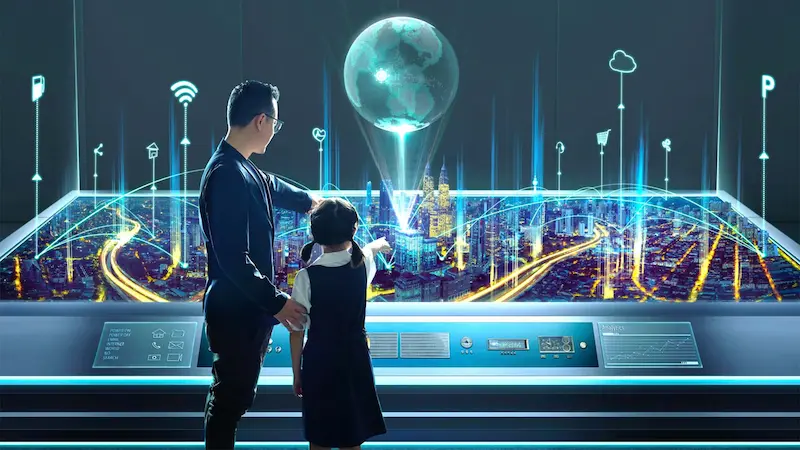
The future digital world encompasses technological, social, economic, and cultural transformations driven by innovation. It includes:
- Hyper-connectivity: Ultra-fast networks like 5G and upcoming 6G enabling real-time interactions worldwide.
- AI-powered systems: Smart applications predicting user needs, automating tasks, and enhancing personalization.
- Immersive digital experiences: AR, VR, and mixed reality (MR) for work, education, entertainment, and social interaction.
- Decentralized platforms: Blockchain and Web3 technologies promoting secure, transparent, and user-controlled online environments.
- Smart cities and IoT ecosystems: Connected urban infrastructure optimizing energy use, traffic, and public services.
These developments will transform how humans live, work, socialize, and engage with technology on a global scale.
Key Features of the Future Digital World
1. Hyper-Connectivity and 6G Networks
The expansion of 5G and the upcoming 6G networks will enable ultra-low latency, high-speed data transfer, and massive device connectivity, supporting IoT ecosystems, autonomous vehicles, and immersive AR/VR experiences.
2. Artificial Intelligence Everywhere
AI will be deeply integrated into daily life and business processes:
- Personalized recommendations on platforms like Netflix, Amazon, and Spotify
- Predictive analytics for businesses to optimize decisions
- Intelligent virtual assistants for work, home, and healthcare
- Autonomous systems in logistics, transportation, and industrial automation
3. Immersive Digital Experiences
The future will bring fully immersive AR, VR, and MR experiences:
- Virtual classrooms and training simulations
- AR-enabled shopping and product try-ons
- Virtual concerts, sports events, and gaming experiences
- Remote collaboration in 3D virtual workspaces
4. Blockchain and Decentralized Ecosystems
Blockchain and decentralized networks will enhance:
- Digital security and identity verification
- Transparent financial transactions and decentralized finance (DeFi)
- NFT marketplaces and digital asset ownership
- User-controlled data, enhancing privacy and reducing dependence on centralized platforms
5. Smart and Connected IoT Ecosystems
The Internet of Things (IoT) will connect homes, industries, and cities, enabling:
- Smart energy management and environmental monitoring
- Autonomous transportation and logistics
- Health monitoring through wearable devices
- Real-time urban traffic and infrastructure management
6. Sustainable Digital Practices
The future digital world will prioritize eco-friendly technologies and responsible practices:
- Green data centers and energy-efficient servers
- Low-carbon cloud computing solutions
- Eco-conscious device manufacturing and recycling initiatives
- Mindful technology usage to reduce digital waste
You may also like it:
Global Conflict Updates: Latest Wars, Crises & Security
World Politics Analysis: Global Power, Diplomacy & Policy
Urban Social Life: Culture, Community, and City Living
Emerging Trends Shaping the Future Digital World

1. Metaverse and Virtual Worlds
The metaverse will create immersive digital environments for work, entertainment, and social interactions, integrating virtual economies, digital real estate, and interactive experiences.
2. AI-Powered Automation and Decision-Making
AI will automate routine tasks, optimize workflows, and enhance business efficiency, allowing humans to focus on creative, strategic, and high-level decision-making.
3. Quantum Computing and Networking
Quantum technologies will revolutionize computing and encryption, providing unmatched processing speeds, solving complex problems, and enabling secure communication channels.
4. Personalized Digital Experiences
AI-driven platforms will offer hyper-personalized content, products, and services, making digital interactions more intuitive, engaging, and tailored to individual preferences.
5. Cybersecurity and Privacy Innovations
Advanced encryption, multi-factor authentication, AI threat detection, and decentralized networks will safeguard data privacy and secure critical digital infrastructure.
6. Growth of Digital Economy and E-Commerce
The digital economy will continue to expand through:
- Online marketplaces and social commerce
- Blockchain-powered transactions
- Digital subscriptions, NFTs, and virtual goods
- Smart financial services and digital banking
7. Remote Work and Digital Collaboration
Virtual offices, collaborative platforms, AI-powered productivity tools, and VR-enabled workspaces will make remote and hybrid work models more efficient and interactive.
8. Digital Education and E-Learning
AI tutors, VR classrooms, and adaptive learning platforms will provide personalized, interactive, and globally accessible education.
9. Health and Wellness Technology
Telemedicine, AI-driven diagnostics, wearable health monitors, and remote care systems will improve access, accuracy, and efficiency in healthcare delivery.
10. Ethical and Responsible Technology
The digital world of the future will emphasize ethical AI, responsible data usage, inclusivity, and transparency to ensure equitable and safe technology adoption.
Importance of the Future Digital World
- Economic Growth: Encourages innovation, entrepreneurship, and global digital trade.
- Global Connectivity: Bridges geographical and cultural gaps, enabling real-time communication.
- Healthcare and Education: Makes essential services accessible and personalized.
- Sustainability: Promotes energy-efficient technologies and environmentally conscious digital practices.
- Enhanced Productivity: Automation and smart tools streamline work and daily life.
Advantages of a Digitally Advanced World
- Efficiency and Productivity: Automation and AI reduce repetitive tasks and optimize workflows.
- Accessibility: Education, healthcare, and essential services become globally available online.
- Innovation: Continuous technology adoption fosters creativity and new business models.
- Global Collaboration: Virtual platforms allow cross-border teamwork and real-time interaction.
- Sustainable Development: Smart technologies reduce environmental impact and resource consumption.
Challenges of the Future Digital World
- Cybersecurity Threats: Greater connectivity increases exposure to attacks and data breaches.
- Digital Divide: Unequal access to technology may widen social and economic gaps.
- Ethical Concerns: AI and automation raise issues around bias, job displacement, and privacy.
- Overdependence on Technology: Excess reliance may reduce human skill development and social interaction.
- Regulatory Gaps: Rapid technological growth challenges governance, laws, and policies.
Real-World Examples of Future Digital Applications
- Metaverse Platforms: Virtual social spaces, immersive commerce, and digital real estate.
- AI in Healthcare: Predictive diagnostics, personalized treatment, and remote monitoring.
- Smart Cities: IoT-enabled traffic, energy, and public safety management.
- Remote Work Tools: VR-enabled collaboration, AI assistants, and cloud-based productivity platforms.
- Blockchain Finance: Decentralized finance (DeFi), NFTs, and secure digital identity verification.
Future Predictions for the Digital World
- AI Integration: Full integration into daily life, from virtual assistants to autonomous transportation.
- Quantum Internet: Revolutionizing data transfer, cybersecurity, and global computing capabilities.
- Metaverse Mainstream Adoption: Becoming a platform for work, socializing, commerce, and entertainment.
- Sustainable Tech Practices: Digital growth aligned with eco-conscious and ethical goals.
- Global Digital Literacy: Increased education and awareness for equitable participation in digital ecosystems.
Conclusion
The future of digital world promises a highly intelligent, immersive, interconnected, and sustainable global ecosystem. Technologies such as AI, AR/VR, IoT, blockchain, quantum computing, and 6G networks will redefine how people live, work, learn, and interact worldwide.
Understanding and adapting to these changes is crucial for businesses, governments, educators, and individuals to harness opportunities, overcome challenges, and thrive in an increasingly digital society.
FAQs About the Future Digital World
1. What is the future of the digital world?
It is an era of hyper-connectivity, AI-driven personalization, immersive experiences, blockchain, and sustainable technology adoption.
2. Which technologies will define the future digital world?
AI, VR/AR, blockchain, IoT, quantum computing, 5G/6G, and the metaverse.
3. How will the digital world impact daily life?
It will enhance convenience, productivity, entertainment, healthcare, education, and global communication.
4. What challenges will the future digital world face?
Cybersecurity risks, digital divide, ethical concerns, overdependence on technology, and governance issues.
5. How can individuals and businesses prepare for the future digital world?
By adopting emerging technologies, embracing digital literacy, prioritizing cybersecurity, and staying informed about trends.